
Keynote and Featured Speakers

Raymond D. Appleberry
Rising Phoenix
Leading from Where You Are: Every Voice Matters in Education
Leadership in education is not defined by a title — it is defined by influence, intentionality, and impact. This engaging and practical session empowers educators at every level — including paraprofessionals, related service providers, teachers, instructional coaches, and administrators — to recognize and activate their leadership potential within their current roles. Participants will explore how everyday actions such as advocacy, collaboration, relationship-building, and reflective practice can drive improved student outcomes and strengthen inclusive learning environments.
Through real-world examples and actionable strategies, attendees will learn how to lead with purpose, contribute meaningfully to team effectiveness, and help cultivate school cultures rooted in empathy, accountability, and excellence. By embracing leadership from where they are, participants will leave equipped with practical tools and renewed confidence to positively influence their classrooms, campuses, and communities — ultimately enhancing the educational experiences of the students they serve.

Lynn M. Roland
Rising Phoenix
Ready – Set – Connect!
Challenging behaviors can disrupt learning—but they can also become powerful opportunities for growth. Experiential learning helps students move beyond resistance by engaging them in meaningful action that connects emotion, reflection, and behavior. When students experience learning rather than just hearing about it, they begin to understand themselves, their choices, and their impact on others.
Explore hands-on strategies that turn problem behaviors into teachable moments. Learn how to present therapeutic and academic content in ways that calm chaos, build trust, and promote lasting positive behavior—one connection at a time.

Brian P. Hopkins
Rising Phoenix
Repair, Reflect, Restore: Building Systems That Transform Behavior Outcomes
Discover Repair, Reflect, Restore, a powerful framework from Rising Phoenix Training and Consulting designed to support students from kindergarten through 12th grade who experience significant sensory, emotional, and high-risk aggressive behavioral challenges. Through structured restorative and therapeutic practices, students develop essential conflict resolution skills, strengthen coping strategies, and learn appropriate behavioral responses—empowering them to navigate challenges with confidence. This holistic approach not only promotes individual student success but also reduces discipline incidents and placement referrals across campuses. Participants will explore practical tools, strategies, and implementation methods to create meaningful, sustainable change within their own schools and districts.

Sharon Bradley
RestorativeFlo Educational Solutions
School Avoidance from a Mental Health Perspective
Details on Breakout Session here. Lorem ipsum dolor sit amet, consectetur adipiscing elit. Nulla vitae ultrices metus. Nulla auctor tortor leo, a fermentum leo congue eget. Vestibulum egestas elit ut suscipit tempus. Nullam felis elit, interdum at pretium eu, ullamcorper non mauris. Fusce posuere, lacus sit amet gravida ornare, augue arcu pulvinar nibh, ut auctor nibh ligula ac lorem. Curabitur eu dolor at ligula accumsan mattis eget ac purus. Suspendisse ultrices nulla sed elit elementum laoreet. Aliquam non tortor diam.

Dr. Andrea Ogonosky
ED311
Designing interventions to Decrease Anxiety and Increase Resiliency
This session will focus on using simple tiered strategies for strengthening resiliency. Strategies aimed at reducing anxiety through cognitive behavior strategies and wellness routines also be discussed.

Nathan Maynard
Science of Discipline
The Science of Discipline
Details on Breakout Session here. Lorem ipsum dolor sit amet, consectetur adipiscing elit. Nulla vitae ultrices metus. Nulla auctor tortor leo, a fermentum leo congue eget. Vestibulum egestas elit ut suscipit tempus. Nullam felis elit, interdum at pretium eu, ullamcorper non mauris. Fusce posuere, lacus sit amet gravida ornare, augue arcu pulvinar nibh, ut auctor nibh ligula ac lorem. Curabitur eu dolor at ligula accumsan mattis eget ac purus. Suspendisse ultrices nulla sed elit elementum laoreet. Aliquam non tortor diam.

Stephanie Powell
Shift Storm
Behavior is a Signal, Not the Problem
When behavior escalates, the instinct is to manage it. But what if behavior isn’t the problem — it’s the data? In this session, we’ll explore what’s actually happening in the brain when students act out, shut down, or push back — and why the most well-intentioned responses often miss the root cause entirely. This isn’t about excusing behavior or lowering the bar. It’s about understanding what’s driving it so educators can respond to the cause instead of just the surface. You’ll leave with a new lens for your toughest situations — and a clearer path toward interventions that actually work.
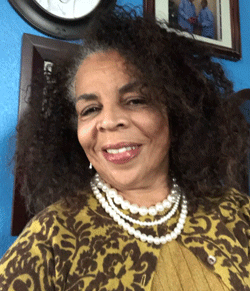
Dr. Dorothea Gordon
Eager Young Minds
Leadership: From Chaos to Calm
Participants will explore personal strategy options for leading with calmness during the chaos of an escalated scholar, team member, or situation. The participants will leave with self-regulation strategies to use to calm the chaos.

Alan Krenek
EdTomorrow
Understanding the Modern Learner: Rethinking Behavior in Today’s Classrooms
Today’s students are growing up in a world dramatically different from the one many of their educators experienced. The constant presence of technology, social media, and a relentless flow of information are shaping how students think, connect with others, and engage inside the classroom.
In this opening keynote, Alan Krenek explores how these influences are impacting today’s learners. From rising feelings of loneliness and disconnection to shifting perspectives on belonging, relationships, and character, he examines how these realities show up in student behavior and engagement at school. Educators will leave with a deeper understanding of today’s learners and why connection has become one of the most powerful foundations for engagement, learning, and positive behavior.
The First Five: A Tier 1 Strategy for Connection, Engagement, and Classroom Culture
Building on the ideas explored in the keynote, this session introduces educators to The First Five, a free, proactive Tier 1 practice within Edtomorrow’s Whole-Child MTSS framework designed to strengthen classroom culture, increase engagement, and build a stronger sense of belonging for students.
Participants will gain a deeper understanding of what the First Five is, how to access it, and how to bring it to life in their daily classroom routines. Through modeling and practical examples, educators will see how intentionally using the first few minutes of class can shape the learning environment and the success students experience within it.

Denise “Circlemamma” Holliday
EdTomorrow
From Hurt to Healing: Reclaiming Connection and Understanding
Denise “Circelmamma” Holliday takes the audience on a powerful journey of healing that speaks to the heart of community, connection, and purpose. Through a shared story of resilience and reflection, the audience is invited to discover what it means to embrace the hard work required to lean in, allow space to evolve, hold ourselves accountable for meaningful change, and rediscover a love of self that makes authentic connection with others possible. This experience challenges the belief that behavior tells the whole story, inviting participants to look beneath the surface and uncover the trauma and lived experiences that often shape the behavior we see in ourselves and students.

Marchelle Sterling
Educator Empowerment Speaker
From Compliance to Connection: A Mental Health Lens on Student Behavior
As student needs evolve, traditional compliance-based discipline models often fail to address the mental health realities driving behavior. This session equips leaders with a whole-child framework for understanding student behavior through the lens of regulation, belonging, and connection. Participants will explore practical strategies to reduce reactive discipline cycles, strengthen teacher confidence, and build sustainable systems of support that improve outcomes for both students and staff.

Vernon Wright
The Wright Leader
The Wonder Twins: Humanizing Leadership
“The Wonder Twins: Humanizing Leadership”, is about those good ol’ days of cartoons on Saturday mornings and making connections to leadership. Wonder Twin powers activate! It all starts with realizing we’re human beings ready to form the shape of our best lives! Can I tell you a secret? Leadership is really about you rediscovering yourself and then discovering others around you. It’s about seeking the elusive “missing ingredients” that can transform your relationships and your life.
Definitely come ready to catch all of the pro tips from this session including, what the Wonder Twins are and how one question can instantly usher you into thinking about vision and mission. I’m telling you, you need to be in this session. Tell a friend to tell a friend!

Steve Cipriano
MisterC TV
Bringing SEL to Life in the Classroom
In this engaging and practical session, Steve Cipriano demonstrates how social-emotional learning can move beyond theory and become a meaningful part of everyday classroom practice. Drawing from his experience working with students with Emotional Disability and diverse learning needs, Steve shares strategies that help educators teach emotional awareness, conflict resolution, and self-regulation in ways students truly understand.
Participants will see how music, storytelling, and simple classroom routines can transform SEL instruction. Using examples from MisterC TV videos, movement-based brain breaks, and SEL-focused children’s literature, Steve shows how these tools can be used both proactively and reactively to support students.
Educators will leave with ready-to-use strategies that strengthen classroom relationships, build a positive learning environment, and help students develop the emotional skills they need to succeed in school and beyond.

Shelneka A. Marsalone
We got goals llc
Homelessness: Understanding, Assessing, & Supporting Students
This session examines the critical role schools play in identifying and responding to student homelessness as a barrier to educational access, stability, and engagement. This presentation highlights practical frameworks that help educators recognize indicators of housing instability, implement trauma-informed and relationship-centered supports, and coordinate services that promote school continuity and student well-being. Emphasizing proactive identification, family engagement, and cross-sector collaboration, the session explores how schools can address attendance challenges, reduce mobility-related disruptions, and strengthen equitable learning opportunities for students experiencing homelessness. Participants will gain actionable strategies for integrating assessment, intervention, and community partnership approaches that support both immediate needs and long-term academic success.

Russell Baxter II
Foundations Counseling, PLLC
TBA
- Describe the impact of screen time and digital overstimulation on emotional regulation, sleep, and attention
- Identify research-based links between technology use and anxiety, depression, and loneliness.
- Recognize signs of digital overuse in clients and develop language to explore these issues in session.
- Apply practical strategies to help clients—and clinicians—set healthy digital boundaries and cultivate tech-life balance.

Hans Magleby
WhyTry
From Overwhelmed to In Control: Practical Strategies to Help Students Regulate Emotions and Behavior
When students feel overwhelmed, behavior often follows—and too many educators are left without clear, practical tools to respond in the moment. This session focuses on what actually works. Instead of diving into theory alone, you’ll learn simple, effective strategies educators can use immediately to help students regulate emotions, de-escalate behavior, and build the skills needed for long-term resilience. You’ll also explore how emotional regulation connects directly to student success, relationships, and classroom culture. Perfect for summer planning and professional learning, this session will equip you with practical tools and approaches you can bring back to your staff and implement in the coming school year.
From Disconnected to Engaged: What Actually Drives Attendance, Motivation, and Student Buy-In
Chronic absenteeism, disengagement, and lack of motivation aren’t just student problems—they’re signals about connection, relevance, and school climate. This session goes beyond surface-level solutions to explore what truly drives student engagement and why students choose to show up—or not. You’ll learn how relationships, resilience, and school-wide systems work together to create environments where students feel seen, supported, and motivated to participate. Perfect for campus and district leaders, this session connects day-to-day practices with larger systems of support—helping you build a culture where both students and staff thrive.